WHO head circumference, 50th percentile, in inches:
| Age | Boys | Girls |
|---|---|---|
| Birth | 13.8 | 13.6 |
| 1 mo | 14.9 | 14.6 |
| 2 mo | 15.6 | 15.2 |
| 3 mo | 16.1 | 15.7 |
| 6 mo | 17.2 | 16.7 |
| 9 mo | 17.8 | 17.4 |
| 12 mo | 18.3 | 17.8 |
| 18 mo | 18.9 | 18.4 |
| 24 mo | 19.3 | 18.9 |
Typical growth: about 0.4 in a month for the first six months, then roughly half that through the rest of the first year.
Why it is measured
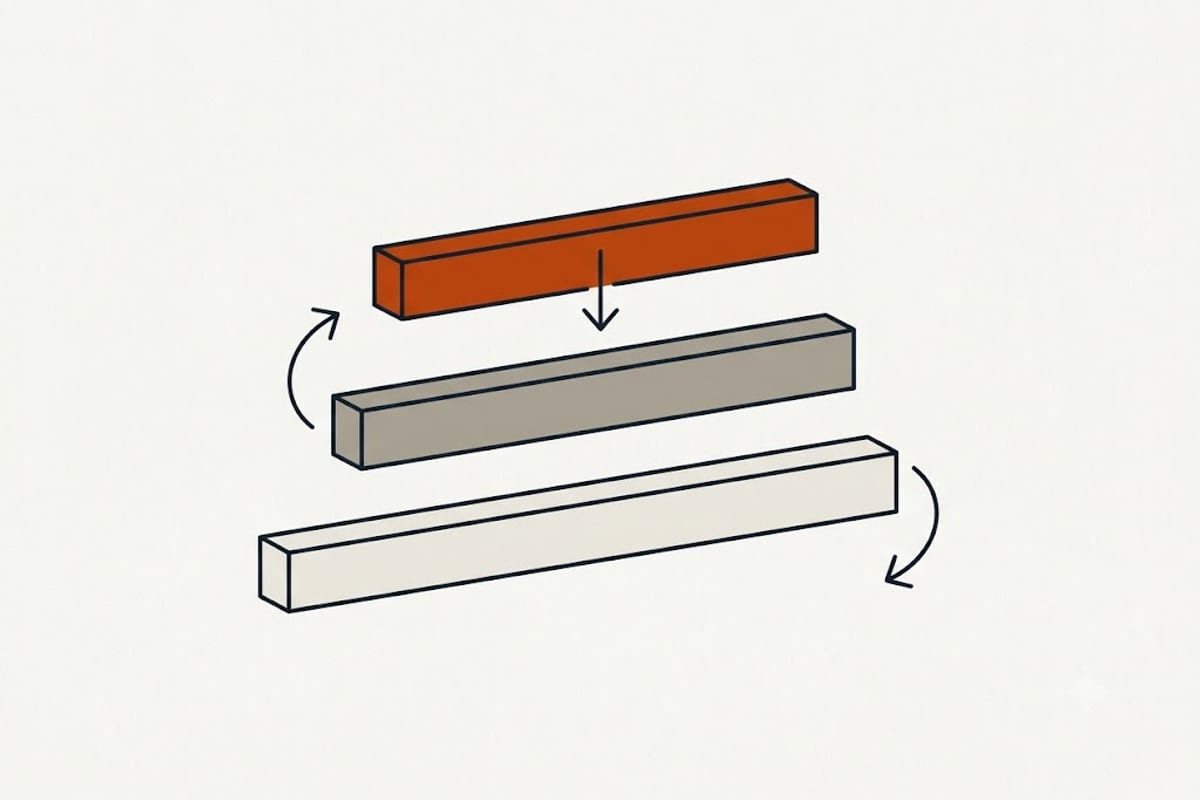
Head circumference is a proxy for brain growth, and it is the measurement least affected by feeding, illness or a bad week.
Weight moves with a stomach bug. Length is awkward to measure accurately in a wriggling baby. Head circumference is stable, quick and reproducible — which makes its trend line unusually informative, and it is why it is taken at every well-baby visit through the first two years.
It is also the measurement most likely to be recorded silently and least likely to be explained.
How to measure it
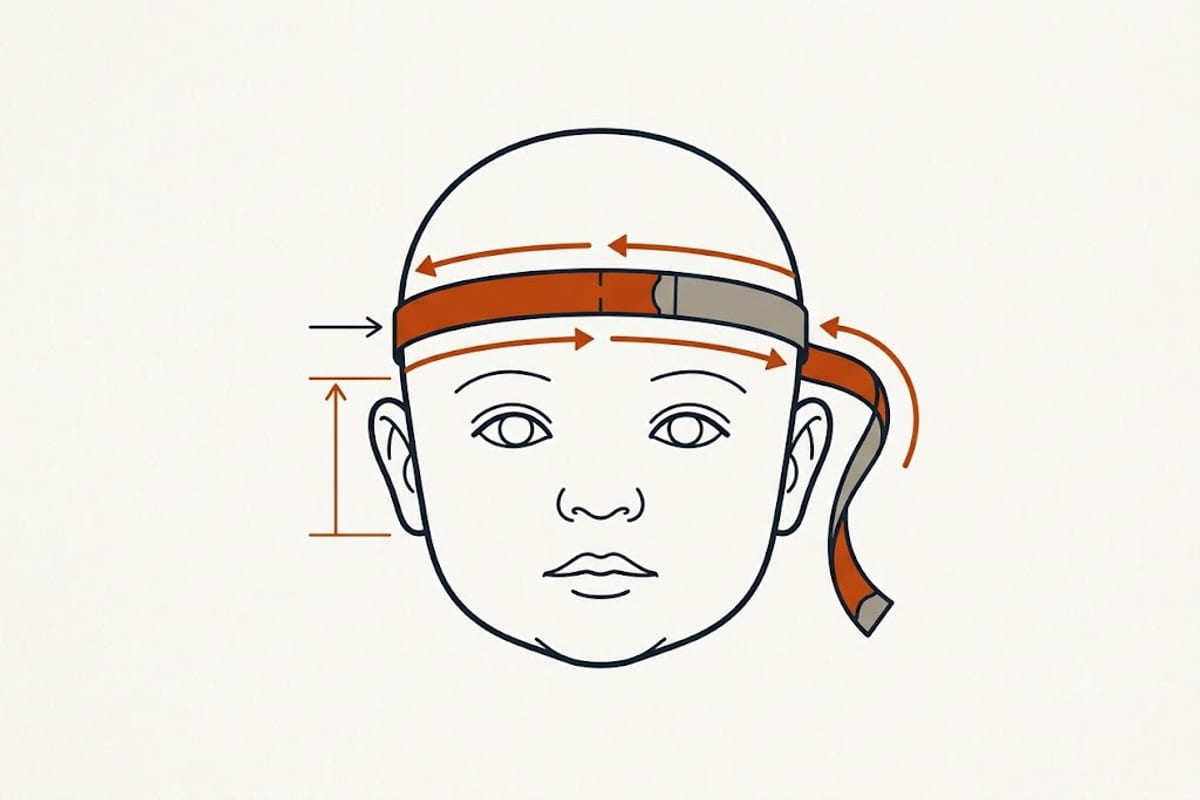
A flexible non-stretch tape, around the widest part of the head: just above the eyebrows and ears, and around the most prominent part at the back.
Take it three times and use the largest. The tape slipping low at the back is the usual error and it reads short by half an inch or more, which is enough to move a baby two percentile bands.
Hair and hair ties affect it. So does a tape that has stretched with use.
Reading it the same way as weight
The number matters far less than the line. A baby tracking along the 25th percentile from birth to two years is growing exactly as expected.
Crossing one line is usually nothing. Crossing two lines, sustained across more than one visit, is examined — in either direction. Head circumference rising rapidly across bands and head circumference flattening are both looked at, for different reasons.
A single measurement in isolation says very little, which is why the chart has a line on it rather than a dot.
Proportion matters more than any single number
The three measurements are read together. A baby on the 10th for weight, length and head circumference is small and proportionate — usually genetics, and usually nothing.
A baby on the 75th for weight and length and the 10th for head circumference is a different picture, and so is the reverse. That is the actual reason all three are plotted.
Family head size is real and worth mentioning to a clinician: babies of large-headed parents tend to sit high on the chart from birth, and that context turns a surprising number into an unsurprising one.
The soft spots
The anterior fontanelle — the diamond-shaped soft spot on top — usually closes between 9 and 18 months. The smaller posterior one closes by about 2 months.
A fontanelle that is sunken can indicate dehydration; one that is bulging when the baby is calm and upright warrants a same-day call. Neither is a routine home check, but both are worth recognising.
Weight and length percentiles are on their own page, and expected weekly gain is here.
Source: World Health Organization Child Growth Standards, head circumference-for-age (0–24 months).
Reference tables only. Any concern about your child's growth belongs with your paediatrician.