WHO length-for-age, 50th percentile, in inches:
| Age | Boys | Girls |
|---|---|---|
| Birth | 19.7 | 19.3 |
| 1 mo | 21.5 | 21.0 |
| 2 mo | 23.0 | 22.5 |
| 3 mo | 24.2 | 23.6 |
| 6 mo | 26.6 | 25.9 |
| 9 mo | 28.3 | 27.6 |
| 12 mo | 29.8 | 29.2 |
| 18 mo | 32.3 | 31.8 |
| 24 mo | 34.4 | 33.9 |
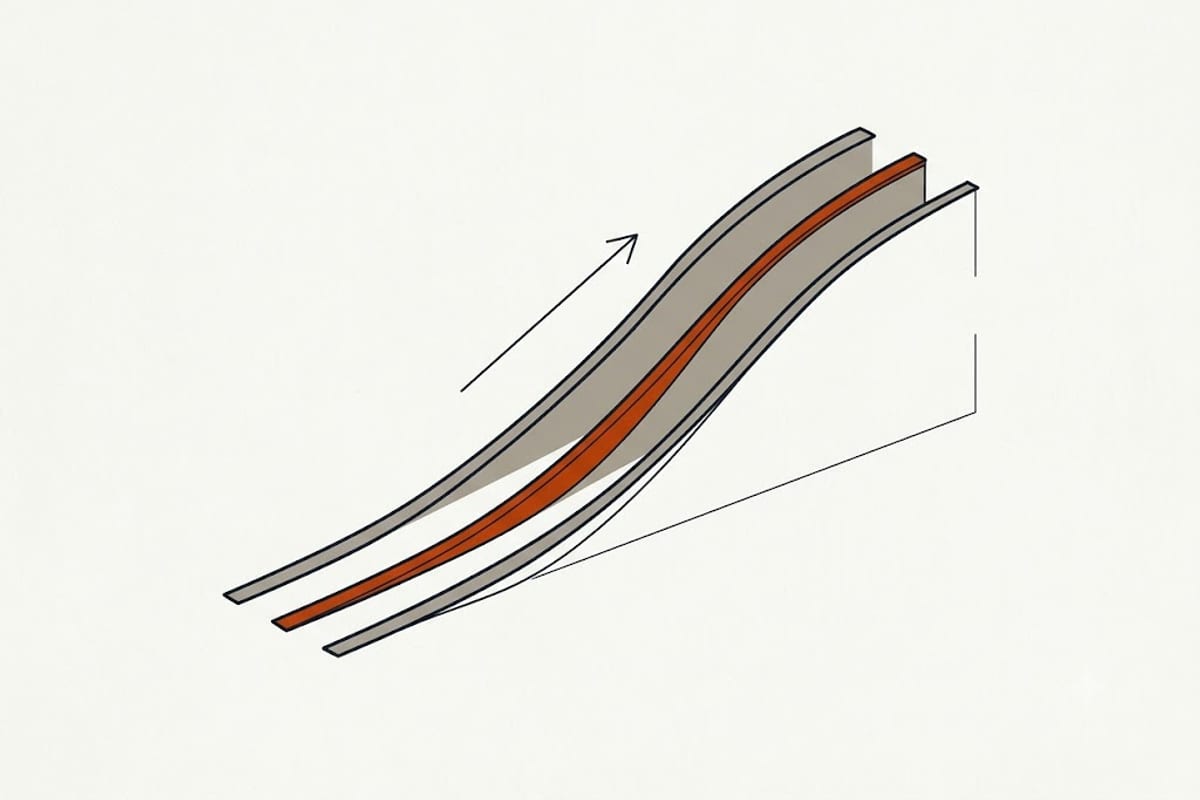
Rough shape: babies grow about 10 inches in the first year and 4 to 5 in the second.
Length is the hardest one to measure
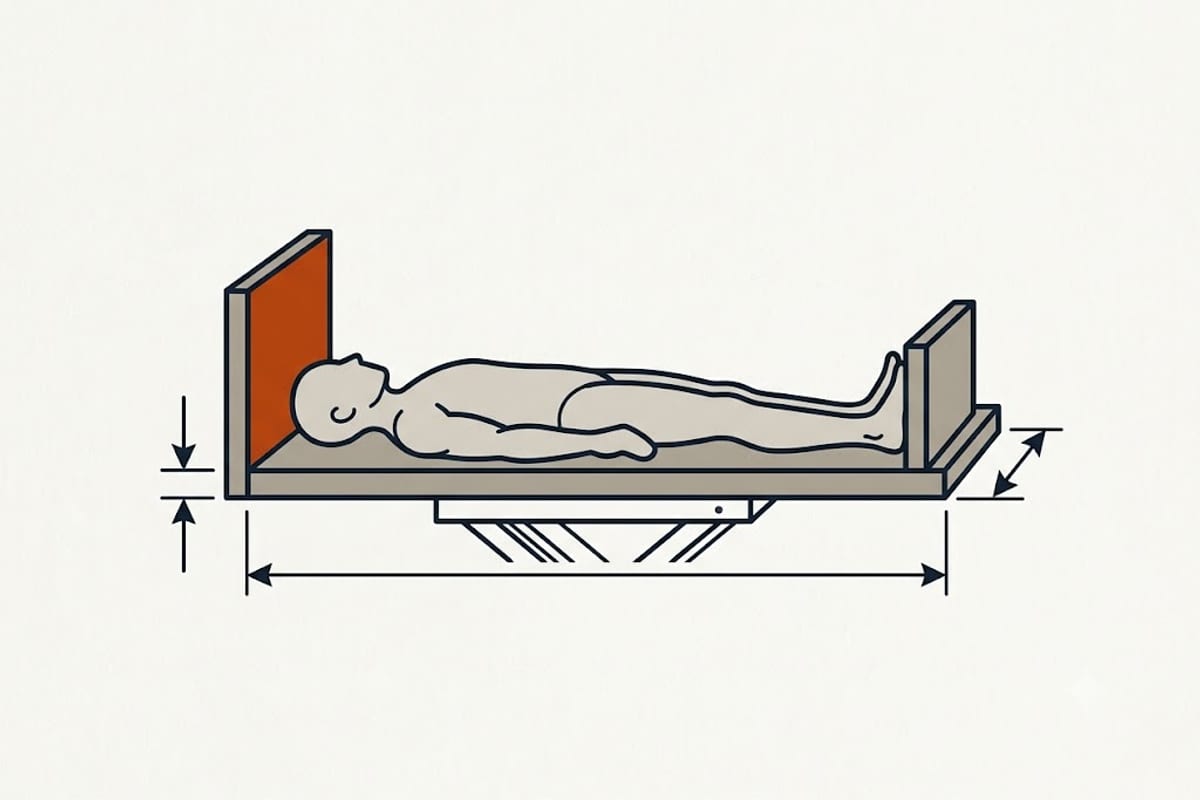
Weight takes a scale. Head circumference takes a tape. Length takes two people and a flat board, and it is routinely taken badly.
Done properly, under two: the baby lies flat, one person holds the head against a fixed board with the eyes looking straight up, another straightens the legs and brings a sliding board to the heels.
A wriggling baby with bent knees measures short by an inch or more, which is enough to move two percentile bands. That is why length looks noisier on a chart than weight does, and why a single apparent drop in length percentile is usually a measurement rather than a change.
If a length reading looks surprising, the first question is who measured it and how.
Length becomes height at two
Under two, children are measured lying down (recumbent length). From two, standing (stature).
Standing height reads about 0.7 cm shorter than lying length for the same child, because the spine compresses under load. Charts account for this — WHO switches at 24 months — but a home chart or an unlabelled clinic chart may not, and the apparent drop at the switch is an artefact rather than a growth problem.
Reading it the same way as weight
The direction matters far more than the number. A baby tracking along the 25th percentile from birth to two is growing exactly as expected.
Crossing one line is common in the first months as babies settle onto their genetic curve after a birth length shaped by the pregnancy. Crossing two lines sustained across more than one visit is what gets examined.
Parental height is real and worth mentioning: children of tall parents commonly track high from early on, and that context turns an outlying number into an expected one.
Weight-for-length is the number that answers the real question
Length alone and weight alone say less than the two together. Weight-for-length is what indicates whether a child is proportionate.
A baby on the 10th for both is small and proportionate — usually genetics. A baby on the 75th for length and the 10th for weight is a different picture, and that is the comparison a paediatrician is actually making when they plot both.
Head circumference is the third measurement, and it is the one most likely to be recorded silently.
Predicting adult height
Two rough methods circulate and both are worth taking lightly.
Mid-parental height: add the parents' heights in inches, add 5 for a boy or subtract 5 for a girl, then divide by two. The result carries roughly a four-inch margin either way, which is wide enough that it predicts a range rather than a number.
Doubling height at two is the other common shortcut, and it is about as accurate as the first — which is to say it gets most children within a few inches and misses a meaningful minority entirely.
Both are parlour tricks rather than clinical tools. What a paediatrician actually watches is the same thing as with weight: whether the child is tracking their own curve, and whether the curve is consistent with the family. A child on the 10th percentile whose parents are both short is following genetics; the same child with two tall parents is a different conversation.
Length is what ends a clothing size
Practically, this is the measurement to write down monthly. It ends sleepsuit sizes, it is what European clothing labels use directly in centimetres, and it moves in a straighter line than weight does.
Weight tables are here, and expected weekly gain is here.
Source: World Health Organization Child Growth Standards, length/height-for-age (0–24 months).
Reference tables only. Any concern about your child's growth belongs with your paediatrician.