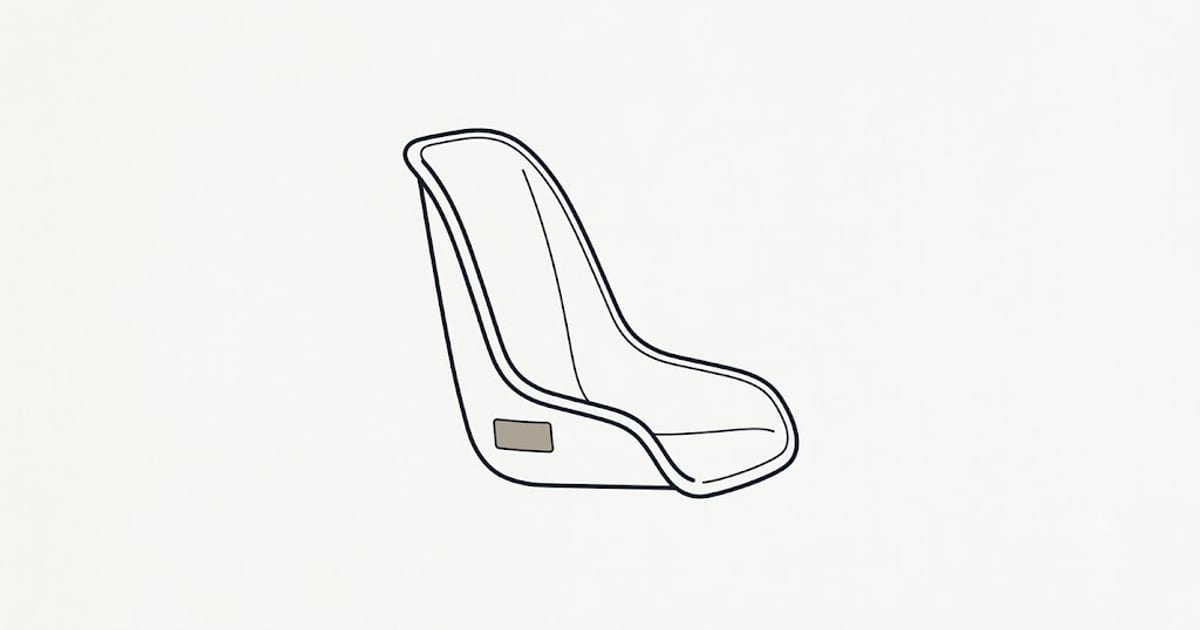
6 to 10 years from the date of manufacture, depending on the brand and the model.
| Typical range | |
|---|---|
| Most convertible seats | 7–10 years |
| Many infant carriers | 6–7 years |
| Some boosters | 6–10 years |
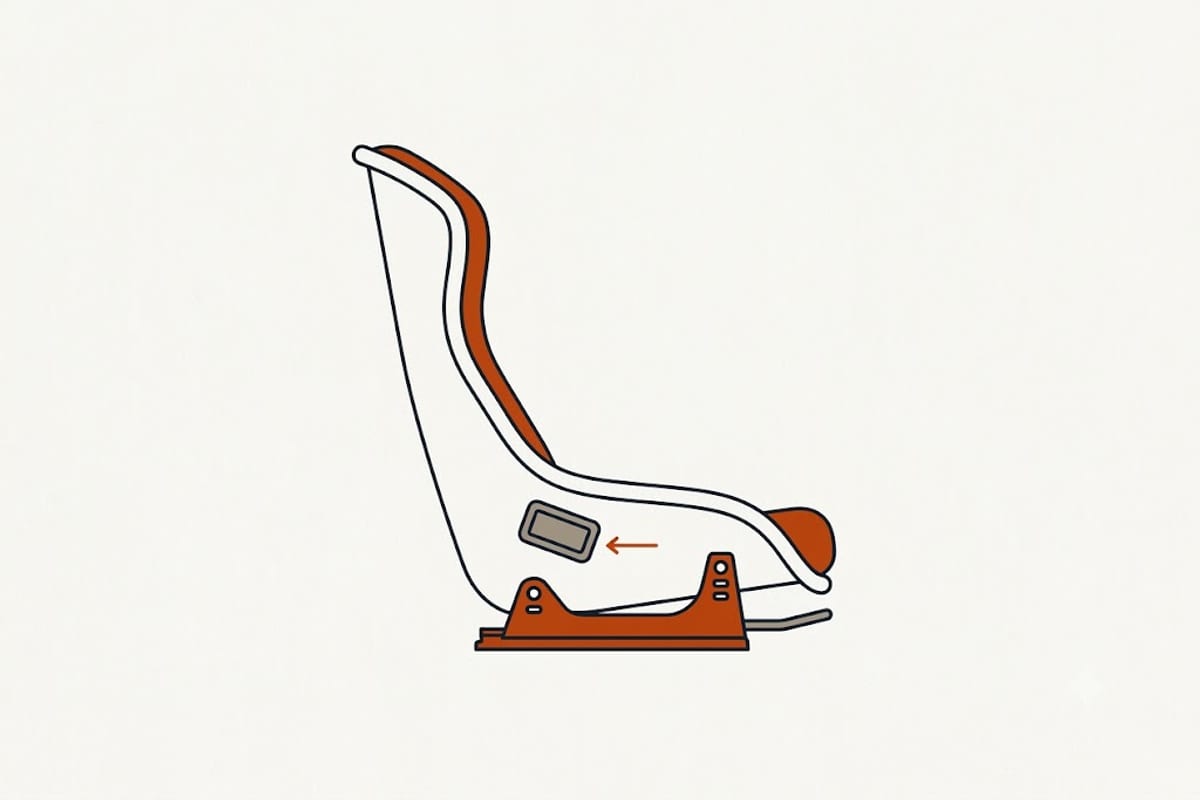
The date is moulded into the plastic shell or printed on a white label on the underside or side. Look for "date of manufacture", "DOM", or an expiry printed directly.
Why a plastic seat expires
Three reasons, and none of them is manufacturer marketing.
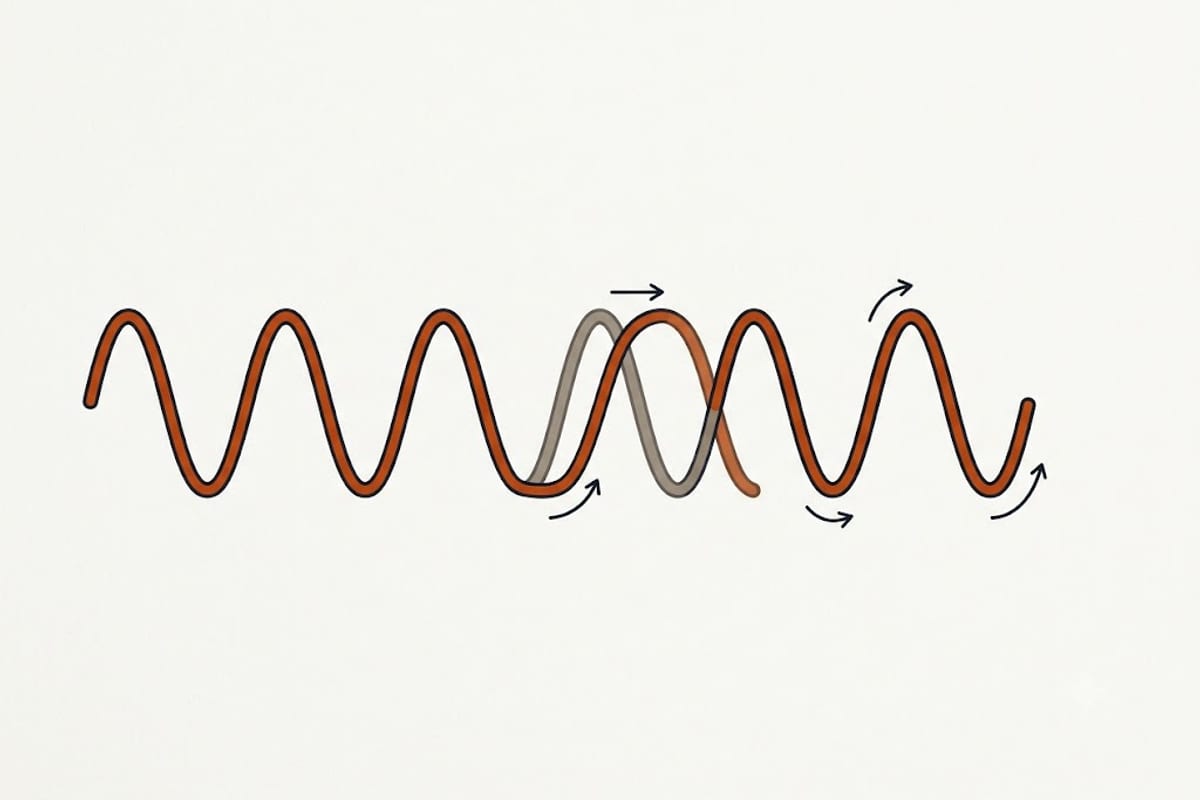
Heat cycling. A car interior can pass 60°C / 140°F in summer and drop below freezing in winter, repeatedly, for years. Polypropylene becomes brittle under that cycling, and a brittle shell behaves differently in a crash than a new one — it can crack rather than flex and absorb.
Standards move. Crash test requirements and side-impact standards have changed several times in the last two decades. A ten-year-old seat was certified against a ten-year-old standard.
Wear and missing parts. Harness webbing frays and loses strength. Labels become unreadable, and the manual and the labels are what tell the next user how to install it. Recalls accumulate and a seat without a traceable model number cannot be checked against them.
After a crash
Replace after any moderate or severe crash, without exception.
NHTSA allows a seat to continue after a minor crash only when all five are true: the vehicle was driveable afterwards; the door nearest the seat was undamaged; nobody was injured; the airbags did not deploy; and there is no visible damage to the seat.
If any one is false, the seat is finished. Damage is often internal and invisible — stress fractures in the shell do not show on the surface.
Many insurers pay for replacement after a claim. It is worth asking rather than assuming.
Second-hand seats
The safest answer is no, unless you know the full history from someone you trust.
What you cannot verify from a stranger: whether it has been in a crash, whether it has been stored in a freezing garage or a hot loft, whether all the parts are original, whether it is subject to an open recall, and whether the manual is present.
A seat with an unreadable label, no manual, missing padding or a cracked shell is not usable at any price. Neither is one past its date, however unused it looks.
Registering it
Register a new seat with the manufacturer, or through NHTSA. It takes two minutes and it is the only way to be contacted about a recall.
Recalls on car seats are not rare, and they are frequently for something specific and fixable — a harness adjuster, a buckle, a label — that the manufacturer will send free of charge.
What actually happens between year six and year ten
Manufacturers set the figure from their own materials testing, and the variation between brands is not arbitrary — a seat with more expanded polystyrene foam and thicker shell walls generally carries a longer stated life than a light, thin-shelled one.
Storage matters more than age within that window. A seat that lived its whole life in a garage in Arizona has taken far more thermal punishment than the same model in a Seattle carport, and neither manufacturer nor label can account for that. A seat stored out of a car between children — indoors, dry, out of sunlight — is in better condition at year eight than a daily-driver seat at year five.
None of that extends the printed date. It is a reason to treat the date as an outer limit rather than a target, and to look harder at a seat that has had a hard life well before it reaches one.
Disposing of an expired seat
Cut the harness straps and write "EXPIRED — DO NOT USE" on the shell before putting it out. That prevents someone taking it from a kerbside and using it.
Some manufacturers and large retailers run trade-in events where an old seat is exchanged for a discount, and several municipalities recycle the plastic.
The limits that end each stage are on their own page, and the booster question is here.
Sources: U.S. National Highway Traffic Safety Administration guidance on car seat use after a crash; manufacturer published useful-life statements.
General reference. Your seat's manual and labels are the authority for your seat.