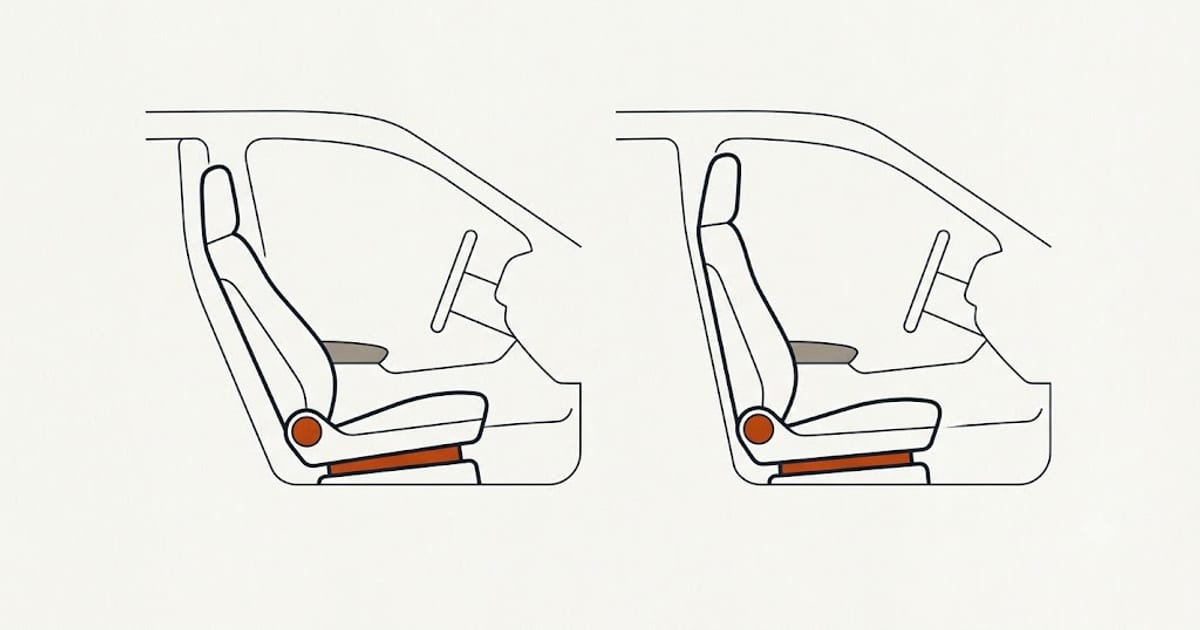
When the child reaches the rear-facing weight or height limit printed on your specific seat. Whichever comes first. Not at a birthday.
Most convertible seats sold today allow rear-facing to 40–50 lb and until the top of the head is within 1 inch of the top of the shell. A great many children reach four years old before either limit.
The guidance no longer names an age
The American Academy of Pediatrics used to say "rear-facing until at least age 2". It removed the age reference in 2018 and replaced it with:
Keep children rear-facing as long as possible, until they reach the highest weight or height allowed by their car safety seat.
The change was made because the age had started working backwards — parents were turning children around at two, treating a minimum as a schedule. The limit on the seat is later than two for most modern seats and most children.
Why rear-facing, in one paragraph of physics
In a frontal crash — the most common serious type — a rear-facing child is pushed into the shell. The whole back of the seat spreads the deceleration across the head, neck and back together.
Forward-facing, the harness holds the torso while the head continues forward. A toddler's head is roughly 25% of body weight (an adult's is about 6%), carried on a neck whose vertebrae have not finished ossifying. The load concentrates exactly where the child is weakest.
That ratio is the entire argument, and it is why the answer is "as long as possible" rather than a date.
The four stages, and what ends each one
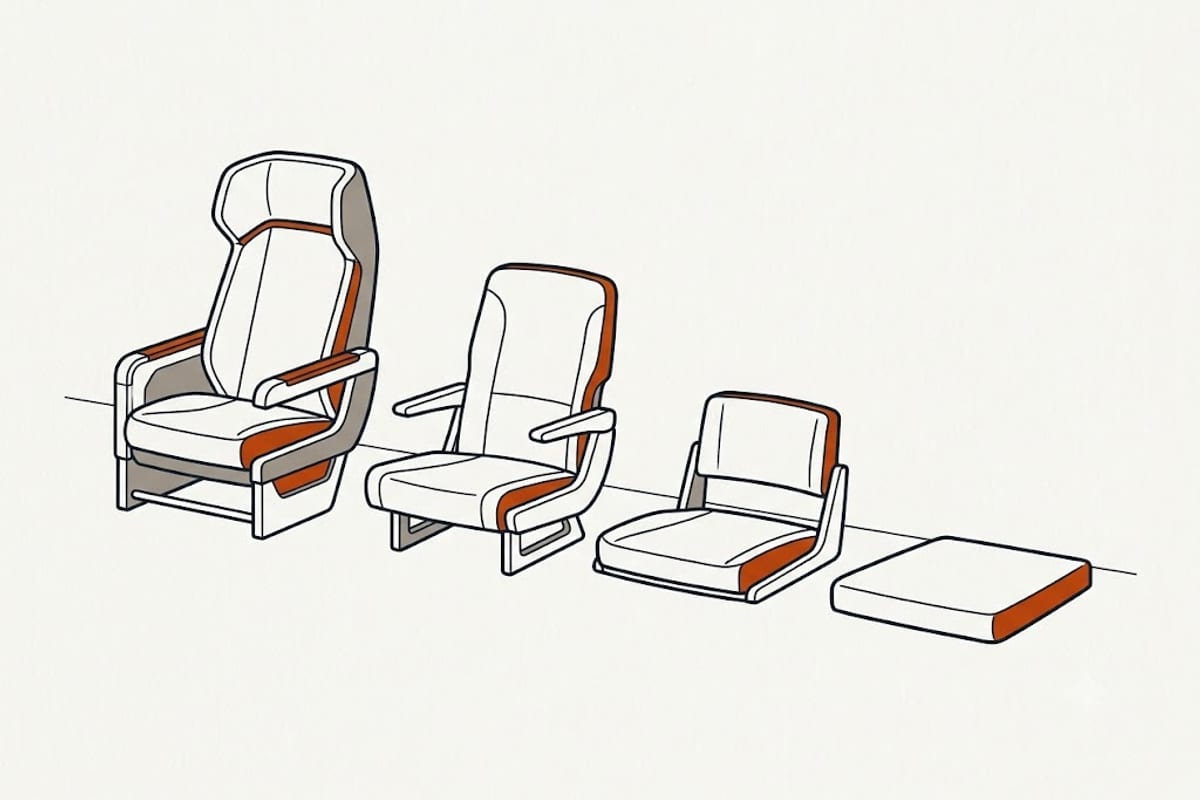
| Stage | Typical range | What ends it |
|---|---|---|
| Rear-facing | Birth to 40–50 lb | Seat's rear-facing weight limit, or head within 1 in of shell top |
| Forward-facing, harness | 22–65 lb | Seat's harness limit, or shoulders above top harness slot |
| Booster | 40–100+ lb | The 5-step fit test in the vehicle |
| Seat belt alone | Usually 10–12 yrs, 4 ft 9 in | Passes the 5-step test without a booster |
Each transition is a downgrade in protection. There is no stage that is an upgrade, and no reason to hurry any of them.
Reading your own seat
Every seat has a label on the side with weight and height ranges for each mode, and a manual with the same numbers. Two details are easy to miss:
Height is often the binding limit, not weight. Tall, light children hit the 1-inch-of-shell rule long before the weight limit. Check the head clearance first.
Some seats have a different limit for each mode on the same shell. A convertible rated to 50 lb rear-facing and 65 lb forward-facing is not rated to 65 lb rear-facing.
The two things people worry about that are not problems
Legs bent or crossed. Children sit cross-legged comfortably; they do not experience it as cramped. There is no pattern of leg injuries in rear-facing children, and leg fractures are more associated with forward-facing.
Not being able to see the child. A mirror solves this. Turning the seat around does not solve a visibility problem; it trades it for a crash-protection problem.
The one thing that actually is a problem
Harness fit. Rear-facing, the straps go through the slots at or below the shoulders. Forward-facing, at or above. The chest clip sits at armpit level, and the harness passes the pinch test — no slack to gather at the shoulder.
A correctly rated seat with a loose harness gives up most of what it was chosen for. More children are in poorly adjusted seats than in the wrong stage.
Growth data helps you see a limit coming: weight percentiles tell you roughly when a weight limit arrives, and height is the same measurement that governs clothing sizes.
Sources: American Academy of Pediatrics, Child Passenger Safety policy statement (2018 revision); U.S. National Highway Traffic Safety Administration car seat guidance.
General reference only. Your seat's own manual and labels are the authority for your seat, and local law sets a separate minimum that may differ.