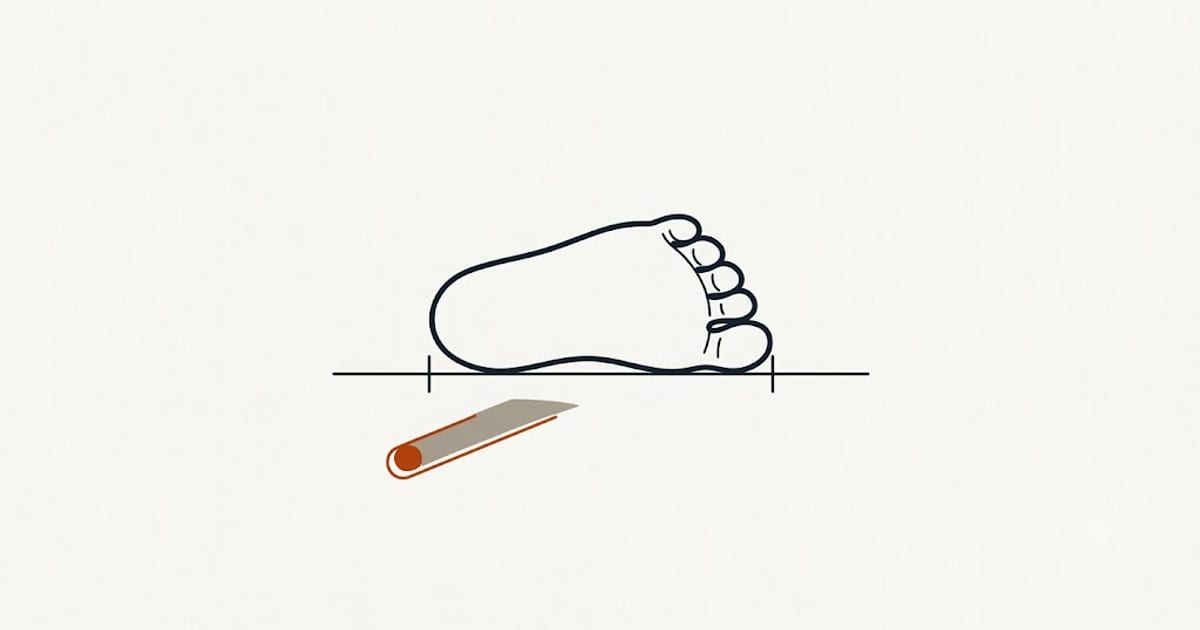
| Age | US size | Foot length |
|---|---|---|
| 0–3 mo | 0–1 | 3.5–3.75 in / 9.0–9.5 cm |
| 3–6 mo | 2 | 4 in / 10.2 cm |
| 6–9 mo | 3 | 4.25 in / 10.8 cm |
| 9–12 mo | 4 | 4.5 in / 11.4 cm |
| 12–18 mo | 5 | 4.75 in / 12.1 cm |
| 18–24 mo | 6 | 5 in / 12.7 cm |
| 2–2.5 yr | 7 | 5.25 in / 13.3 cm |
| 2.5–3 yr | 8 | 5.5 in / 14.0 cm |
Age is a weak guide here — weaker than for clothes. Foot length varies enormously between children of the same age, and the only reliable method is to measure.
Babies do not need shoes
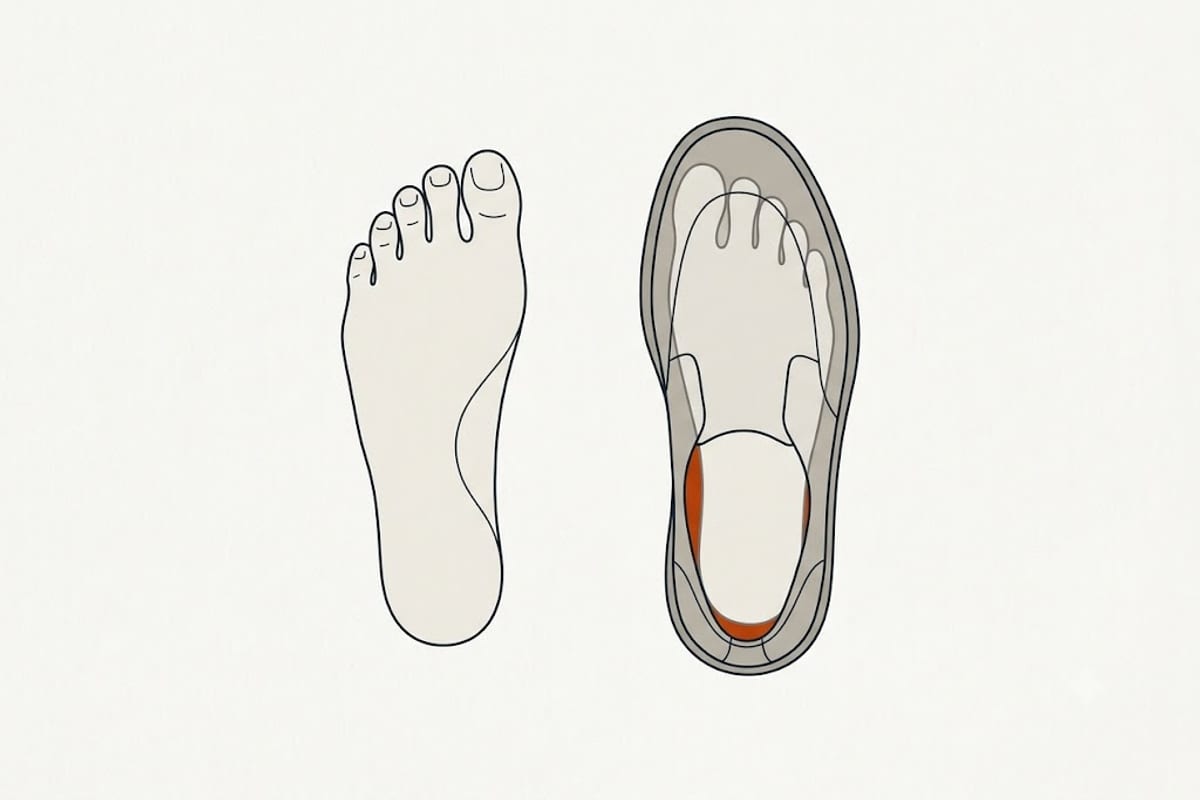
A baby who is not walking outdoors has no use for shoes beyond warmth and appearance. Podiatrists are close to unanimous on this.
Feet develop through sensory feedback from the ground — the toes grip, the arch forms, and balance is learned through contact. A stiff sole removes that feedback at precisely the stage it is most useful.
Barefoot indoors is the recommendation for pre-walkers and new walkers alike. Socks with grip soles for warmth on hard floors. Soft-soled booties for cold or for going out.
The first real shoes are for outdoor walking, which is usually somewhere between twelve and eighteen months.
Measuring properly
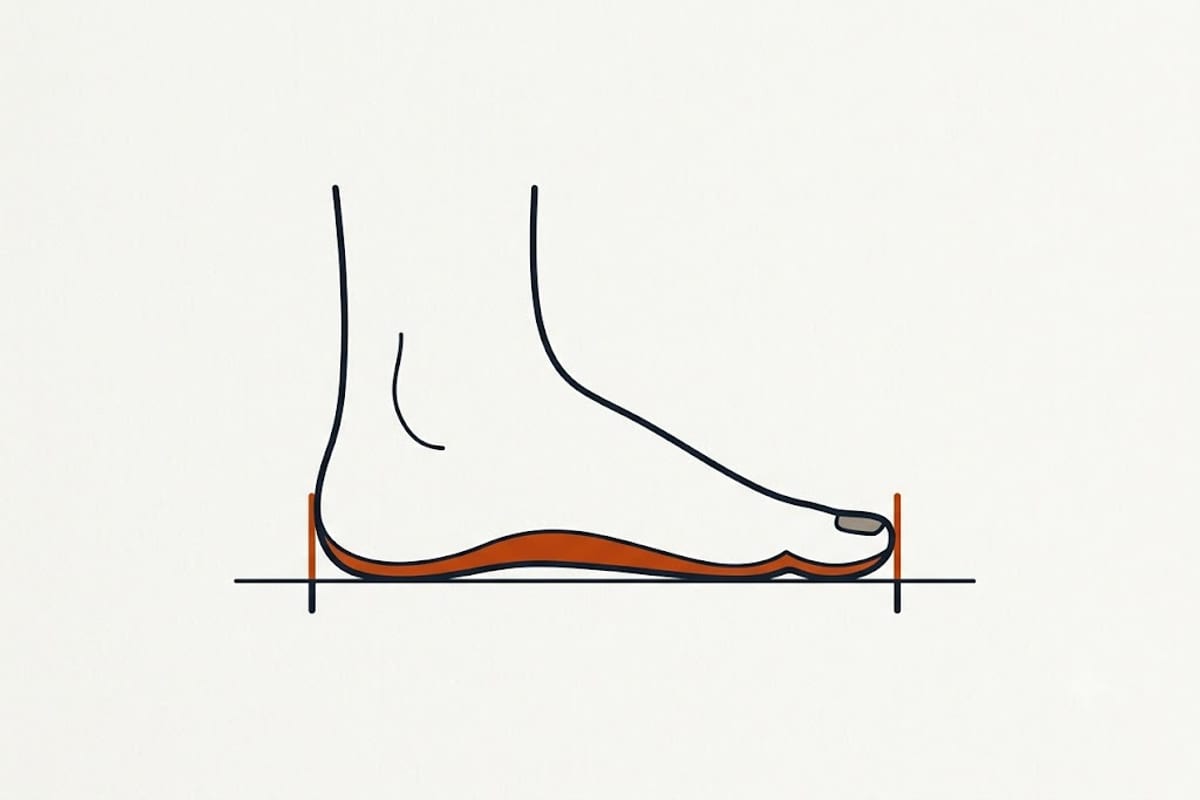
Standing, with weight on the foot. A foot spreads under load and measures 3 to 5 mm longer than it does sitting.
Heel against a wall, mark the end of the longest toe — which is not always the big toe. Measure both feet and use the larger; a difference of half a size between feet is common.
Measure in the afternoon. Feet swell through the day and a shoe fitted in the morning can be tight by evening.
Add half an inch / 1.2 cm of growing room at the toe — about a thumb's width. Any more than that and the shoe slides, which causes its own problems.
How fast feet grow
Faster than most people restock:
| Age | Check size every |
|---|---|
| Under 15 months | 6–8 weeks |
| 15 months–2 years | 8–10 weeks |
| 2–3 years | 3–4 months |
Children rarely complain about tight shoes. Toes curl to fit and the child adapts silently, which is why the check has to be on a calendar rather than on a complaint.
Red marks after removal, or a toe pressed against the end when standing, means the size went a while ago.
What a first shoe should be
Flexible sole that bends easily at the ball of the foot. If it does not bend in your hands, it will not bend under a toddler.
Wide toe box. Toes should splay, not be squeezed to a point.
Secure fastening — velcro or laces. A shoe held on by the toes gripping is a shoe that changes how a child walks.
Light. A heavy shoe on a small leg alters gait.
Flat. No arch support, no cushioned heel, no raised sole. Arch support in a developing foot is not helpful and may hinder.
Hand-me-down shoes
Clothes yes, shoes generally no. A worn sole has moulded to another child's gait, and the wear pattern pushes the next foot into it.
Barely worn shoes outgrown quickly are the exception — which, given how fast feet grow, is a large share of them.
Clothing sizes run on weight and length bands, and growth generally is read against the curve.