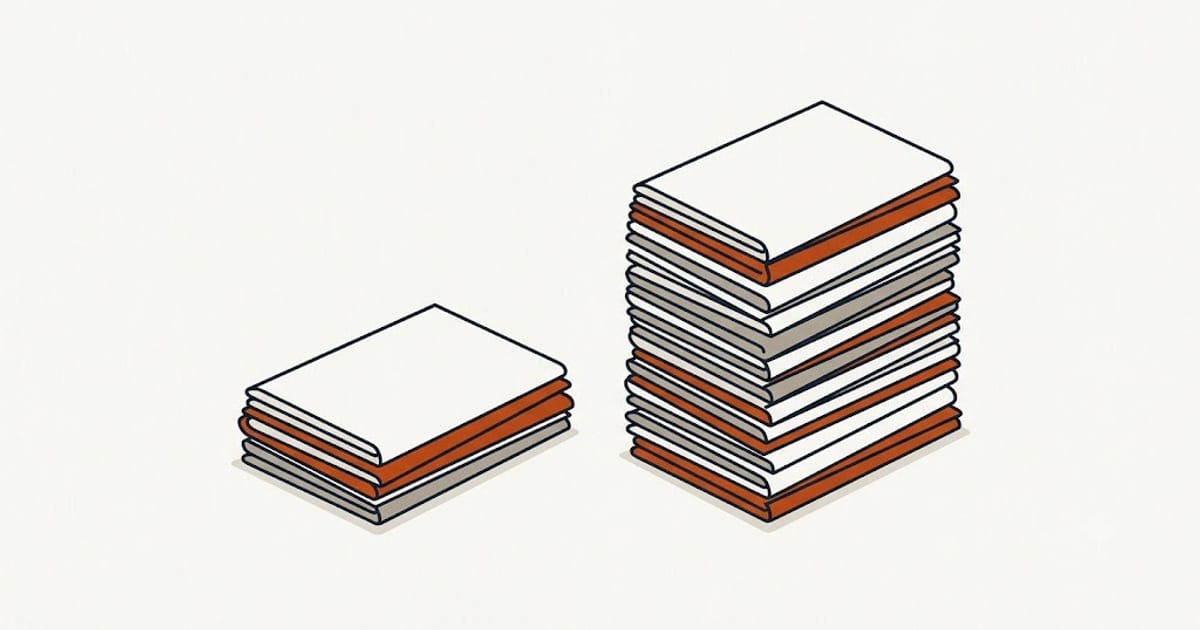
Washing every other day, for one size:
| Item | How many |
|---|---|
| Sleepsuits / babygrows | 6–8 |
| Bodysuits / vests | 6–8 |
| Sleep sacks | 2–3 |
| Hats | 2 |
| Socks or booties | 4–5 pairs |
| Cardigan or jacket | 2 |
| Outfits for going out | 2–3 |
| Swaddles or muslins | 4–6 |
That is it. Every additional item on a published list is either optional or a duplicate of something above under a different name.
Laundry frequency is the whole variable
| You wash | Sleepsuits needed |
|---|---|
| Daily | 4–5 |
| Every other day | 6–8 |
| Twice a week | 10–12 |
| Weekly | 14–16 |
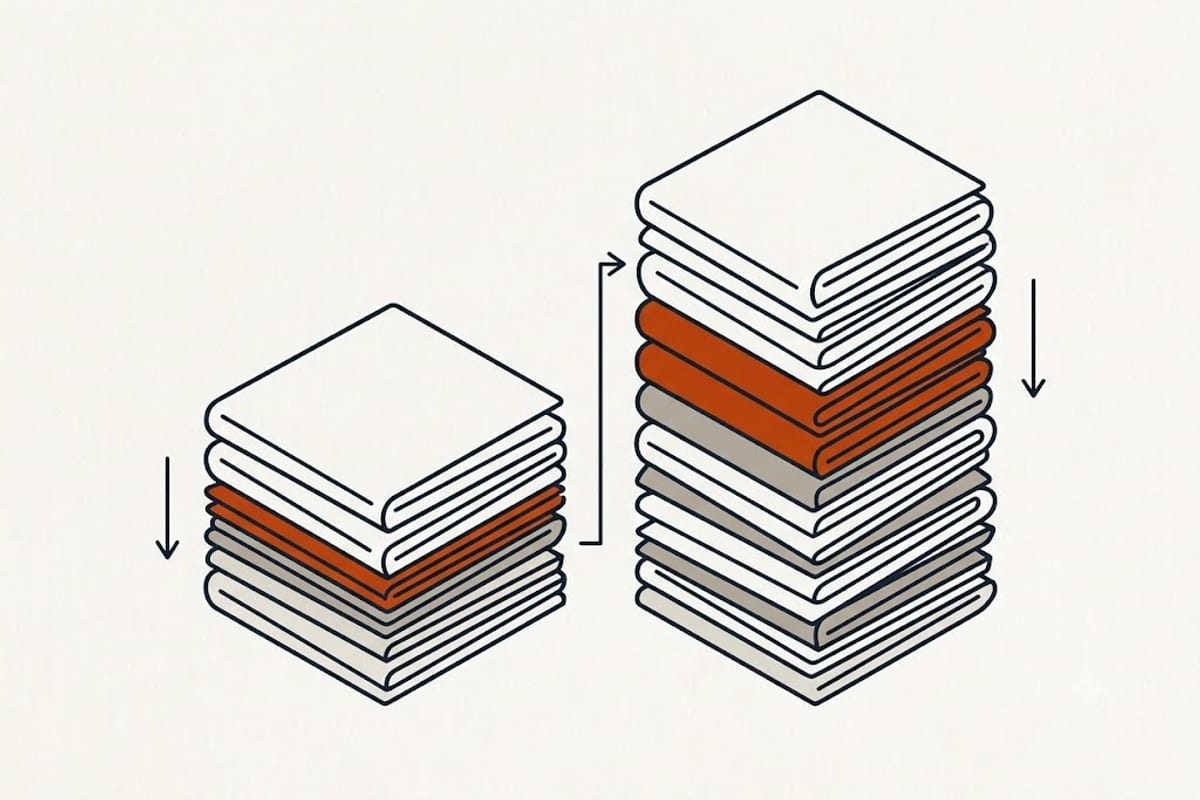
Newborns get through 2 to 4 outfit changes a day — nappy leaks, spit-up, and the occasional total failure at 3am. The number of garments you need is that rate multiplied by how long between washes, plus a margin for the one that gets ruined.
Most people with a newborn end up washing every day or two regardless of intention, which is why the middle row is the realistic one.
Newborn size is frequently skipped
A baby born at 8 lb or more may never wear newborn size at all, and even an average baby is often through it in two to four weeks.
Buy two or three newborn sleepsuits and no more until the baby arrives. Weight and length at birth answer the question in a way no amount of planning does, and 0–3M gets far more wear.
The exception is a baby expected to be small or early, where newborn and preemie sizes matter and are harder to find in a hurry.
What is genuinely not needed
Shoes. A baby who is not walking has no use for them. Socks and soft booties do the job.
Newborn jeans and structured clothing. Stiff waistbands over a nappy, poppers in awkward places, and a change that takes four times as long at 3am.
Anything that goes over the head in the first weeks, before the baby can support their own head. Front-opening and side-snap garments are much easier.
Matching sets in quantity. They photograph well and get worn once.
More than two hats. Indoors, hats are actively discouraged for sleep because of overheating.
What actually matters in a garment
Nappy access without full undressing. At ten changes a day this outweighs everything else on the label.
Wide neck or shoulder snaps. Head circumference grows fast, and a tight neckline is why a well-fitting top gets abandoned early.
Fold-over mitten cuffs. Newborns scratch their own faces, and built-in cuffs are more reliable than separate mittens that fall off.
Poppers rather than zips for the first weeks, or a zip that runs from the ankle up so a change does not mean undressing the top half.
Washing them before first wear
New baby clothes carry finishing chemicals from manufacture and dust from packaging and handling. Washing before first wear removes both and is worth doing for anything that touches skin.
A non-biological detergent without fragrance is the usual recommendation for the first months, and skipping fabric softener entirely — it coats fibres, reduces absorbency in muslins and cloth nappies, and is a common irritant on new skin.
Wash at 40°C where the label allows rather than 60°C. Hotter washes shrink cotton in length, which is the dimension that ends the size, so a hot wash effectively costs you a fortnight of wear on every sleepsuit.
The second-hand point
Baby clothes at this stage are worn a handful of times before being outgrown, which makes second-hand unusually good value and unusually good condition.
Shoes are the exception — a worn sole has moulded to another child's gait — but that hardly matters when a baby does not need shoes anyway.
Sizes run on weight and length bands rather than age, and length is the dimension that ends a size.